
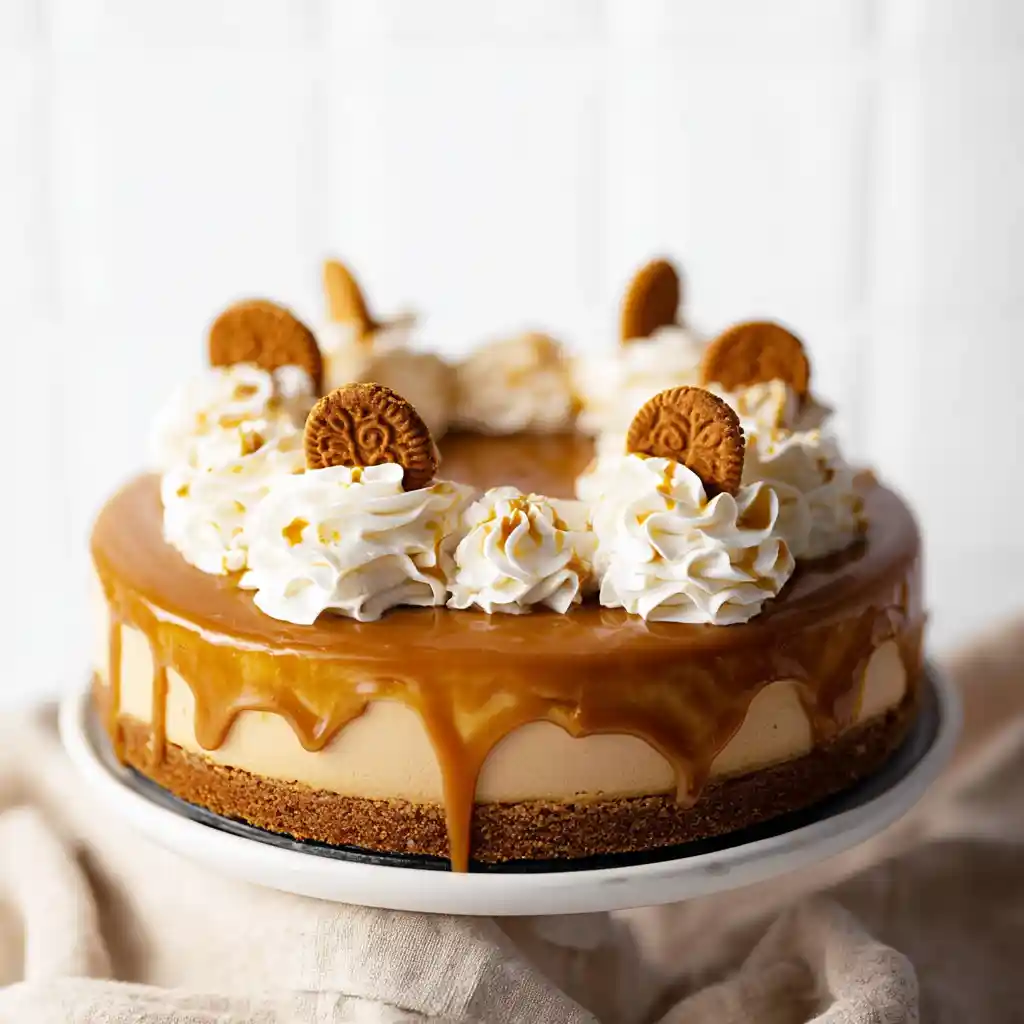
Biscoff cheesecake is a rich, creamy baked dessert made with a thick Lotus Biscoff cookie crust, smooth cookie butter filling, and a glossy topping. It bakes gently in a water bath to create a silky, crack-free texture and chills until perfectly set. The flavor is warm and caramelized with subtle cinnamon notes that blend beautifully into the cream cheese base. Each slice delivers balanced sweetness and deep cookie butter richness. This dessert looks impressive, yet the process is simple when you follow the steps carefully. If you love cookie butter, this cheesecake will quickly become a favorite.
Discover more soft, fluffy, and comforting desserts in our Cakes variety, filled with easy homemade cake recipes perfect for everyday sweetness and special moments.
Table of Contents
Table of Contents
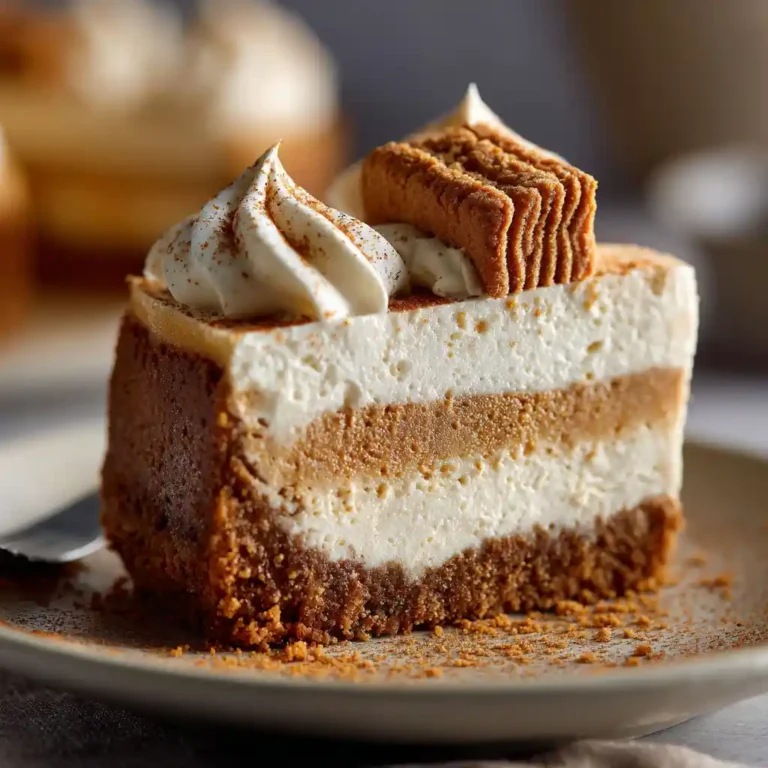
How to Make Biscoff Cheesecake
Creamy and decadent Biscoff cheesecake with a thick Lotus cookie crust, smooth cookie butter filling, and rich Biscoff topping. Perfect for cookie butter lovers and special occasions.
- Total Time: 8 hours
- Yield: 14 slices 1x
Ingredients
8.8 ounces Lotus Biscoff cookies (250 grams)
6 tablespoons unsalted butter, melted (65 grams)
1 cup Biscoff spread
24 ounces full-fat brick-style cream cheese (680 grams)
1/2 cup granulated sugar (100 grams)
1/2 cup brown sugar (105 grams)
1 tablespoon cornstarch
1/2 teaspoon cinnamon
3/4 cup sour cream (180 ml)
2 teaspoons vanilla extract
3 large eggs
2 large egg yolks
Boiling water for water bath
3/4 cup Biscoff spread (for topping)
1/2 cup whipping cream (120 ml)
Lotus Biscoff cookies for decorating
Instructions
1. Remove cream cheese, sour cream, and eggs from refrigerator 30 minutes before starting.
2. Wrap outside of 9-inch springform pan with oven bag and multiple layers of foil.
3. Preheat oven to 325F (170C).
4. Crush Lotus cookies into fine crumbs and mix with melted butter.
5. Press mixture firmly into pan and bake for 8 minutes.
6. Warm Biscoff spread in microwave for 45 seconds and stir until smooth.
7. Beat cream cheese, sugars, cinnamon, and cornstarch until smooth.
8. Mix in warmed Biscoff spread, sour cream, and vanilla.
9. Whisk eggs and yolks separately and mix into batter on low speed.
10. Pour batter over crust.
11. Place pan in roasting pan and add boiling water 1 inch up sides.
12. Bake 45 to 55 minutes until center has gentle wobble.
13. Cool in water bath to room temperature.
14. Refrigerate at least 6 hours or overnight.
15. Warm Biscoff spread and pour over chilled cheesecake.
16. Beat whipping cream to stiff peaks and pipe rosettes.
17. Decorate with Lotus cookies and chill until serving.
Notes
Use full-fat brick-style cream cheese only.
Wrap pan securely to prevent water leakage.
Chill overnight for best texture and flavor.
Store covered in refrigerator up to 5 days.
Nutrition values are estimates based on 14 slices with toppings.
- Prep Time: 45 minutes
- Cook Time: 50 minutes
- Category: Cakes
- Method: Baking
- Cuisine: American
- Diet: Vegetarian
Nutrition
- Serving Size: 1 slice
- Calories: 604
- Sugar: 31g
- Sodium: 296mg
- Fat: 42g
- Saturated Fat: 20g
- Unsaturated Fat: 10g
- Trans Fat: 0.2g
- Carbohydrates: 48g
- Fiber: 1g
- Protein: 9g
- Cholesterol: 145mg
Ingredients and How to Make Biscoff Cheesecake
Making Biscoff cheesecake at home is easier than it looks. This baked Biscoff cheesecake uses simple pantry ingredients, but proper technique ensures the smoothest texture and richest flavor.
Because Biscoff cheesecake relies on full-fat dairy and a cookie butter base, each ingredient plays a specific role in creating its signature creamy consistency.
Equipment
- 9-inch springform pan
- Large roasting pan (big enough to hold the springform pan)
- Electric mixer
- Aluminum foil
- Disposable oven bag or slow cooker liner
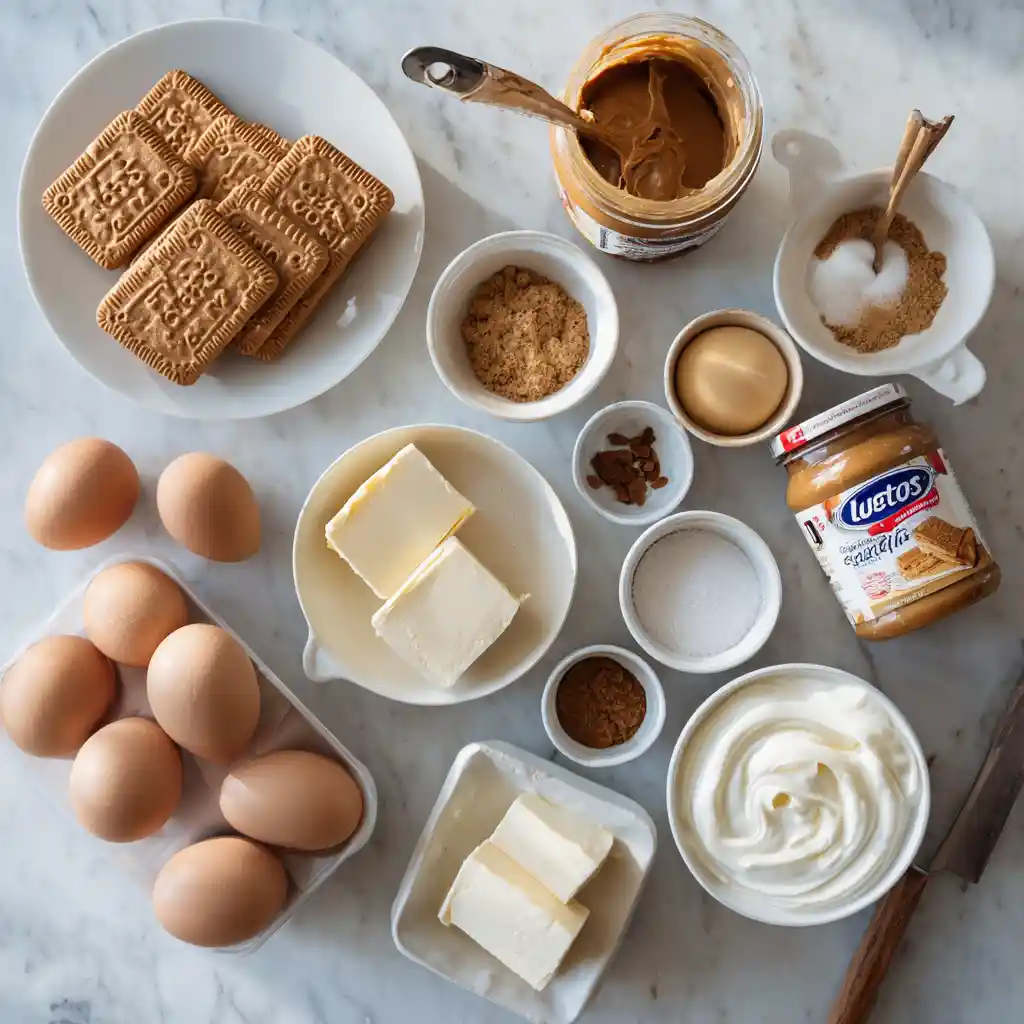
Complete Ingredient List for Biscoff Cheesecake
| Section | Ingredient | Amount |
|---|---|---|
| Lotus Cookie Crust | Lotus Biscoff cookies | 8.8 ounces (250 grams), a little over 2 cups once crushed |
| Lotus Cookie Crust | Unsalted butter, melted | 6 tablespoons (65 grams) |
| Cheesecake Filling | Biscoff spread | 1 cup |
| Cheesecake Filling | Cream cheese, full-fat brick style | 24 ounces (680 grams) |
| Cheesecake Filling | Granulated sugar | 1/2 cup (100 grams) |
| Cheesecake Filling | Brown sugar | 1/2 cup (105 grams) |
| Cheesecake Filling | Cornstarch | 1 tablespoon |
| Cheesecake Filling | Cinnamon | 1/2 teaspoon |
| Cheesecake Filling | Sour cream | 3/4 cup (180 ml) |
| Cheesecake Filling | Vanilla extract | 2 teaspoons |
| Cheesecake Filling | Large eggs | 3 |
| Cheesecake Filling | Large egg yolks (in addition to eggs) | 2 |
| Baking | Boiling water | For water bath |
| Topping | Biscoff spread | 3/4 cup |
| Topping | Whipping cream | 1/2 cup (120 ml) |
| Topping | Lotus Biscoff cookies | For decorating |
Step-by-Step Instructions for Biscoff Cheesecake
Step 1: Prepare Ingredients
Before starting your Biscoff cheesecake, remove the cream cheese, sour cream, and eggs from the refrigerator about thirty minutes in advance. Room temperature ingredients blend smoothly and prevent lumps in the filling.
Wrap the outside of a nine-inch springform pan with a disposable oven bag and secure tightly. Then wrap it with aluminum foil at least three times to fully seal the bottom and sides. This step protects your Biscoff cheesecake from water seeping into the crust.
Preheat your oven to 325°F (170°C).
Step 2: Make the Lotus Cookie Crust
Crush the Biscoff cookies into fine crumbs using a food processor or by placing them in a freezer bag and crushing with a rolling pin.
Mix the crumbs with melted butter until evenly coated. Press the mixture firmly into the bottom of the prepared pan, creating a slight lip around the edges.
Bake the crust for eight minutes. Remove it from the oven while keeping the oven on. This pre-baked crust gives Biscoff cheesecake a firm base that supports the creamy filling.
Step 3: Prepare the Cheesecake Filling
Warm the Biscoff spread in the microwave for about forty-five seconds on medium power. Stir until smooth and set aside.
In a large bowl, beat cream cheese, brown sugar, granulated sugar, cinnamon, and cornstarch until smooth and creamy, about two to four minutes. Scrape down the sides of the bowl as needed.
Add the warmed Biscoff spread, sour cream, and vanilla extract. Mix until fully incorporated and silky.
In a separate bowl, whisk together the eggs and egg yolks. Add them to the batter in two additions, mixing on low speed just until combined. Avoid overmixing, since too much air can cause cracks in your Biscoff cheesecake.
Step 4: Bake the Biscoff Cheesecake in a Water Bath
Pour the cheesecake batter over the baked crust.
Place the wrapped springform pan inside a large roasting pan. Carefully pour boiling water into the roasting pan until it reaches about one inch up the side of the springform pan.
Bake for forty-five to fifty-five minutes. The center of the Biscoff cheesecake should still have a gentle wobble when nudged, while the edges appear set.
Step 5: Cool and Chill Properly
Allow the cheesecake to cool in the water bath until the water reaches room temperature. Then remove the pan and place it on a cooling rack.
Once cooled, cover with foil and refrigerate for at least six hours or overnight. Proper chilling allows the Biscoff cheesecake to fully set and develop its rich cookie butter flavor.
Step 6: Add the Signature Topping
Warm additional Biscoff spread for about forty-five seconds until smooth enough to drizzle.
Run a sharp knife around the edge before unclamping the pan. Blot any condensation gently with paper towel.
Pour the warm spread over the chilled cheesecake, letting it drip slightly over the sides. Chill briefly to set.
Beat whipping cream until stiff peaks form. Pipe decorative rosettes around the edges and garnish with crushed cookies or whole Lotus biscuits.
Why This Biscoff Cheesecake Recipe Works
This Biscoff cheesecake recipe works because each ingredient supports texture, structure, and flavor balance. When baked properly, Biscoff cheesecake becomes smooth, creamy, and rich without being overly dense.
First, full-fat brick-style cream cheese provides structure. Because it contains less air than whipped or spreadable versions, the filling sets firmly while staying silky. As a result, the cheesecake slices cleanly without collapsing.
Second, the combination of granulated sugar and brown sugar enhances depth. Granulated sugar sweetens evenly, while brown sugar adds subtle caramel notes that complement the cookie butter flavor. Therefore, the sweetness feels balanced rather than overwhelming.
Cornstarch plays an important role as well. It stabilizes the batter and reduces the risk of cracking. Meanwhile, sour cream adds moisture and slight tang, which prevents Biscoff cheesecake from tasting too heavy.
The eggs and extra yolks create a luxurious texture. Because yolks contain fat, they add richness and smoothness. However, mixing them gently prevents excess air from entering the batter.
The water bath method is essential. Baking Biscoff cheesecake in a water bath regulates temperature and prevents the edges from cooking too quickly. Consequently, the center sets evenly and develops that signature creamy consistency.
Chilling also improves flavor. During refrigeration, the cookie butter flavor intensifies and the structure fully firms. That patience transforms good cheesecake into exceptional cheesecake.
Finally, the layered approach makes this dessert stand out. The thick Biscoff cookie crust adds crunch, the filling remains smooth and spiced, and the topping delivers bold cookie butter finish. Together, those layers make Biscoff cheesecake feel indulgent yet perfectly balanced.
Discover more soft, fluffy, and comforting desserts in our Cakes variety, filled with easy homemade cake recipes perfect for everyday sweetness and special moments.
Variations and Substitutions for Biscoff Cheesecake
One of the best things about Biscoff cheesecake is how adaptable it is. While the classic version is rich and indulgent, you can adjust flavors and textures depending on your preference.
No Water Bath Option
If you prefer not to use a water bath, you can bake the cheesecake without it. However, the texture may be slightly firmer and small cracks may appear. To reduce cracking, bake at a slightly lower temperature and avoid overmixing the batter.
Still, the water bath method gives the creamiest results.
No-Bake Style Alternative
If you want a simpler approach, you can make a no-bake version. Replace the eggs with additional whipped cream and increase the chilling time. The texture will be lighter and more mousse-like instead of dense and baked.
However, the baked version delivers deeper caramelized cookie flavor.
Chocolate Biscoff Cheesecake
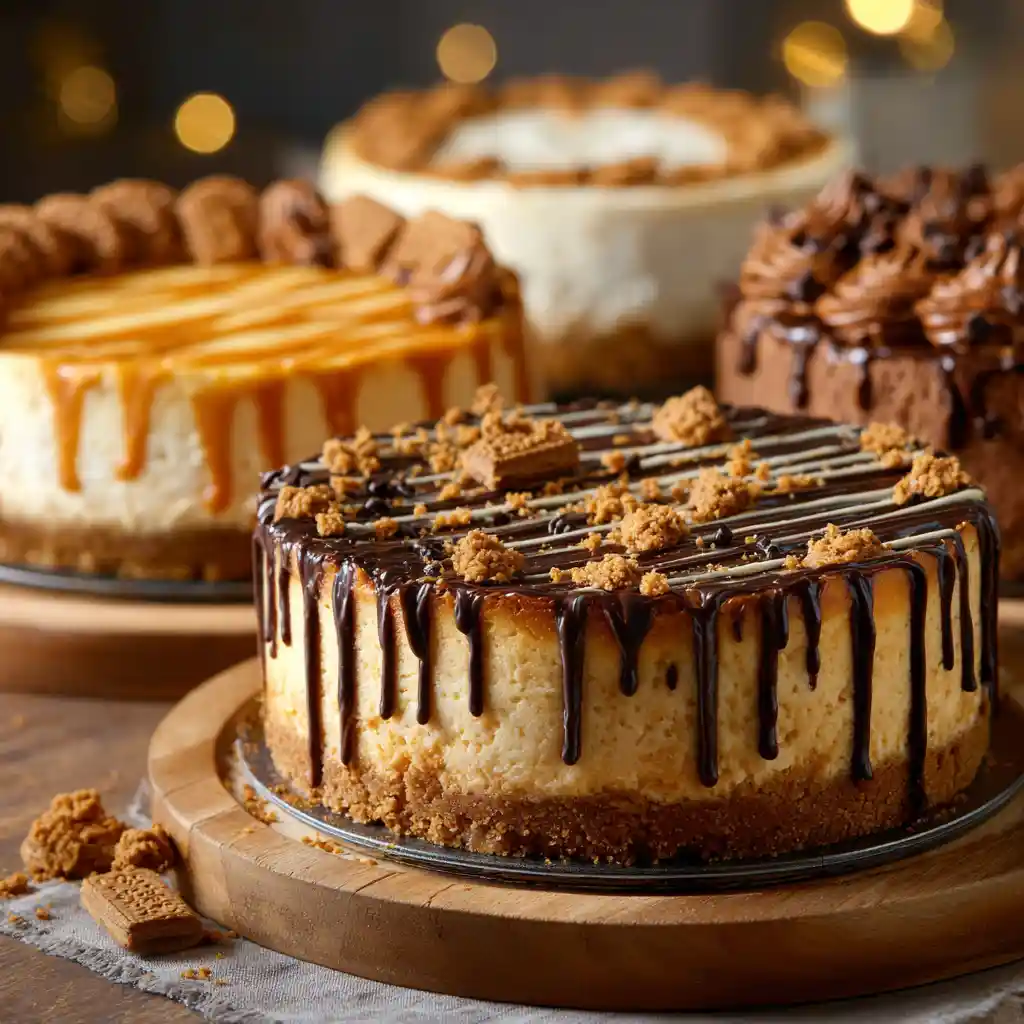
For a richer variation, add melted chocolate to the filling. Dark chocolate pairs beautifully with cookie butter and enhances the warm spice notes. You can also drizzle chocolate ganache over the topping for a dramatic finish.
Because Biscoff already has caramelized sweetness, choose semi-sweet or dark chocolate to keep the balance right.
Extra Cookie Butter Swirl
Before baking, swirl additional warmed Biscoff spread into the top of the batter. Use a knife to gently create marbled patterns. This not only adds visual appeal but also intensifies the cookie butter flavor.
Lighter Option
If you prefer a slightly lighter texture, reduce the sugar slightly and use full-fat Greek yogurt instead of sour cream. The cheesecake will remain creamy, although the tang will be slightly stronger.
Avoid low-fat cream cheese, since it can make the texture grainy and less stable.
Crust Variations
Although the classic Lotus cookie crust is traditional, you can experiment with:
- Graham crackers for a milder base
- Chocolate cookies for deeper flavor
- A mixed cookie crust combining graham and Biscoff
Each option changes the overall flavor profile while maintaining structure.
These variations allow you to customize Biscoff cheesecake while keeping its signature cookie butter identity intact.
Expert Tips for Perfect Biscoff Cheesecake Texture
Texture is everything when it comes to Biscoff cheesecake. Fortunately, a few precise techniques guarantee a smooth, creamy, crack-free result every time.
Use Room Temperature Ingredients
Always allow the cream cheese, eggs, and sour cream to sit at room temperature before mixing. Cold ingredients do not blend smoothly, which can create lumps in the batter. Because Biscoff cheesecake relies on a silky filling, this step is essential.
Beat Cream Cheese Properly First
Start by beating the cream cheese with the sugars before adding any liquid ingredients. This ensures the base becomes completely smooth. Once the texture is creamy, then add the Biscoff spread and sour cream.
Mixing in stages prevents overworking the batter later.
Do Not Overmix After Adding Eggs
Once you add the eggs, mix on low speed just until combined. Overmixing introduces excess air, which can cause the cheesecake to rise too much and then crack while cooling.
For the smoothest Biscoff cheesecake, stop mixing as soon as the batter looks uniform.
Wrap the Pan Carefully
A proper seal prevents water from entering the crust. Use a disposable oven bag plus multiple layers of foil if possible. Even a small leak can make the crust soggy.
This step protects the structure and texture of the finished cheesecake.
Watch for the Gentle Wobble
The center should still have a slight wobble when you gently nudge the pan. If the center looks completely firm in the oven, it may be overbaked. Remember, Biscoff cheesecake continues to set as it cools.
Pulling it at the right moment keeps the filling creamy instead of dry.
Cool Gradually
Sudden temperature changes cause cracks. Allow the cheesecake to cool slowly in the water bath until the water reaches room temperature. Then move it to a cooling rack before refrigerating.
Gradual cooling helps the structure settle evenly.
Chill Long Enough
Refrigerate for at least six hours, but overnight is ideal. Chilling allows the cookie butter flavor to deepen and the texture to firm properly. Cutting too soon can result in messy slices.
Patience truly makes a difference here.
These techniques ensure your Biscoff cheesecake turns out smooth, rich, and beautifully set with clean slices and no cracks.
How to Store and Serve Biscoff Cheesecake
Proper storage keeps Biscoff cheesecake fresh, creamy, and flavorful. Because this dessert contains full-fat dairy, refrigeration is essential for both texture and safety.
Storing in the Refrigerator
Store Biscoff cheesecake covered tightly with foil or in an airtight container. It will stay fresh in the refrigerator for up to five days. Keeping it sealed prevents it from absorbing other flavors from the fridge.
For best results, store the cheesecake without whipped cream topping and add decorations the day you plan to serve. This keeps the topping fresh and stable.
Make-Ahead Tips
Biscoff cheesecake is an excellent make-ahead dessert. In fact, the flavor improves after chilling overnight. You can bake it one day in advance, refrigerate it fully, and add the topping just before serving.
Because the structure firms as it chills, slicing becomes easier the next day.
Freezing Biscoff Cheesecake
You can freeze Biscoff cheesecake successfully. First, chill it completely in the refrigerator. Then wrap the whole cheesecake or individual slices tightly in plastic wrap, followed by foil.
Freeze for up to two months for best quality. When ready to serve, thaw overnight in the refrigerator. Avoid thawing at room temperature, since condensation can affect the topping.
How to Slice Cleanly
For neat slices, use a sharp knife dipped in hot water. Wipe the blade clean between each cut. Because the cheesecake is dense and creamy, this technique prevents dragging and keeps layers clean.
Always slice all the way through the crust to maintain even portions.
Serving Suggestions

Serve Biscoff cheesecake chilled but not ice-cold. Let it sit at room temperature for about fifteen to twenty minutes before serving. This allows the filling to soften slightly and enhances the cookie butter flavor.
For presentation, garnish with whipped cream rosettes, crushed Lotus cookies, or whole biscuits placed vertically on top. As a result, the dessert looks bakery-worthy while remaining simple to prepare.
These storage and serving techniques ensure your Biscoff cheesecake stays creamy, flavorful, and beautifully presented from the first slice to the last.
Common Mistakes and How to Fix Them for Biscoff Cheesecake
Even experienced bakers can run into small issues when making Biscoff cheesecake. Fortunately, most problems are easy to correct with simple adjustments.
Cheesecake Cracks on Top
Why it happens:
Overmixing after adding eggs or baking without a water bath can cause cracking. Rapid cooling can also create surface splits.
How to fix it:
Mix eggs gently on low speed and bake in a proper water bath. Cool the cheesecake gradually before refrigerating. If cracks appear, the Biscoff topping easily hides them.
Cheesecake Is Too Dense
Why it happens:
Overbaking or using cold ingredients can result in a heavy texture.
How to fix it:
Remove the cheesecake when the center still has a slight wobble. Always use room temperature cream cheese and eggs for smooth blending.
Quick Troubleshooting Table
| Problem | Why It Happens | How to Fix It |
|---|---|---|
| Cracked top | Overmixing or no water bath | Mix gently and bake in water bath |
| Too dense | Overbaking | Remove when center still wobbles |
| Soggy crust | Water leakage | Wrap pan tightly and seal well |
| Did not set | Underbaked or not chilled long enough | Bake fully and chill overnight |
| Lumpy filling | Cold ingredients | Use room temperature dairy |
These practical fixes ensure your Biscoff cheesecake turns out smooth, creamy, and beautifully structured every time.
Discover more cozy dessert recipes in minutes, comfort and sweetness await in every mug.
👉 Save your next craving on Pinterest boards and discover more no-bake dessert recipes you can make in just minutes.
👉 Join me on Facebook page and discover more quick dessert recipes made with love, your next 5-minute chocolate moment is waiting!
👉 Find me on Instagram to explore more 5-minute no-bake dessert ideas, simple, sweet, and made to warm your day.
Frequently Asked Questions About Biscoff Cheesecake
What is Biscoff cheesecake made of?
Biscoff cheesecake is made with a crushed Lotus Biscoff cookie crust, full-fat cream cheese, sugar, sour cream, eggs, and Biscoff spread. It is typically baked in a water bath to achieve a smooth texture, then topped with more cookie butter and whipped cream.
What flavour is Biscoff?
Biscoff has a warm caramelized flavor with notes of brown sugar and cinnamon. The cookies are lightly spiced and slightly crisp, which gives desserts a cozy, deep sweetness without tasting overly sugary.
Why is Lotus Biscoff used in cheesecake?
Lotus Biscoff is used in cheesecake because its caramelized spice flavor pairs perfectly with creamy dairy. The cookie butter blends smoothly into the filling, while the cookies create a firm, flavorful crust. As a result, the cheesecake develops rich texture and balanced sweetness.
What is Biscoff made of?
Biscoff cookies are made primarily from wheat flour, sugar, vegetable oils, and cinnamon. The cookie butter spread is created by grinding those cookies into a smooth paste with added oils and sweeteners, which makes it spreadable and ideal for baking.
Why You’ll Love This Biscoff Cheesecake
This Biscoff cheesecake stands out because it combines bold flavor with smooth, bakery-style texture. The crisp cookie crust supports the creamy filling, while the extra cookie butter topping adds a luxurious finish. Although it looks elegant and sophisticated, it is completely achievable at home with patience and proper technique. The flavor deepens after chilling, which makes it perfect for preparing ahead of time. Whether served at holidays, birthdays, or special gatherings, it always feels like a centerpiece dessert. Once you taste this creamy, caramel-spiced cheesecake, you will understand why cookie butter desserts are so loved.
“If you tried this recipe, tell me how it turned out. Did you keep it gooey or cook it fully?”